David Sinclair's Recommended Supplements for Longevity 2026
I’ve been following David Sinclair’s work for a while now, and even though I don’t believe there’s a one‑size‑fits‑all approach to longevity, I’m always interested in the supplements David Sinclair talks about in interviews.
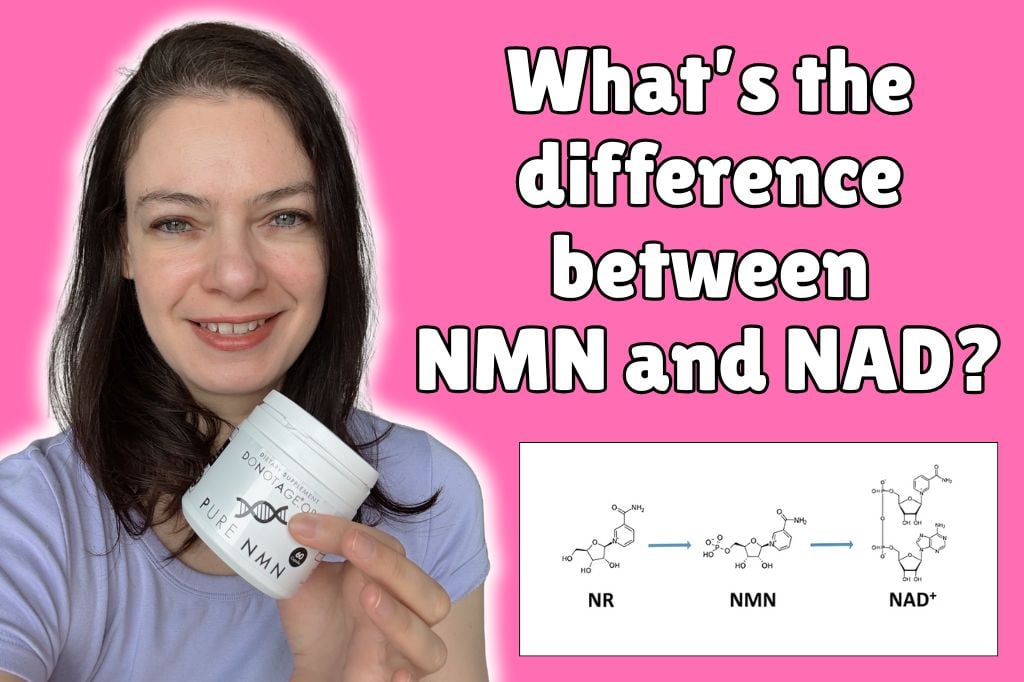
As a 44‑year‑old woman who just wants to feel healthy, energised, and strong, I take NMN every day because it genuinely makes a difference for me. I believe NMN is one of the top supplements that Sinclair recommends.
Recently, a few people in my audience have asked about the Sinclair supplement stack—and even how it compares to Bryan Johnson’s—so I thought I’d put together a simple, up‑to‑date overview of what he’s shared publicly. It’s not an official David Sinclair protocol, but it’s the most consistent information he’s mentioned across podcasts and YouTube interviews.
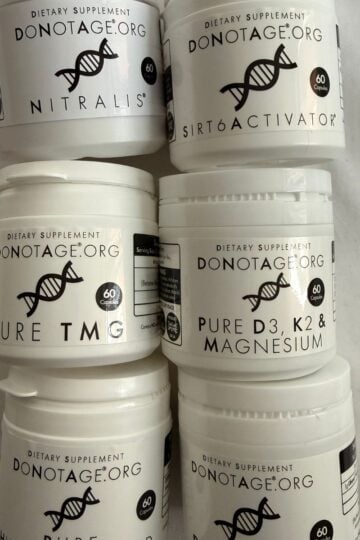
And before you all ask - the NMN that I take is the one by DoNotAge. David Sinclair has never publicly shared which brand he uses but I use DoNotAge because it’s third-party tested for purity and produced to research-grade standards, which is important to me given how variable NMN quality can be.
For transparency, I’m an affiliate for DoNotAge and have been given a discount code to share with my audience. The promo code UKBEAUTY will get you 10% off all DoNotAge products.
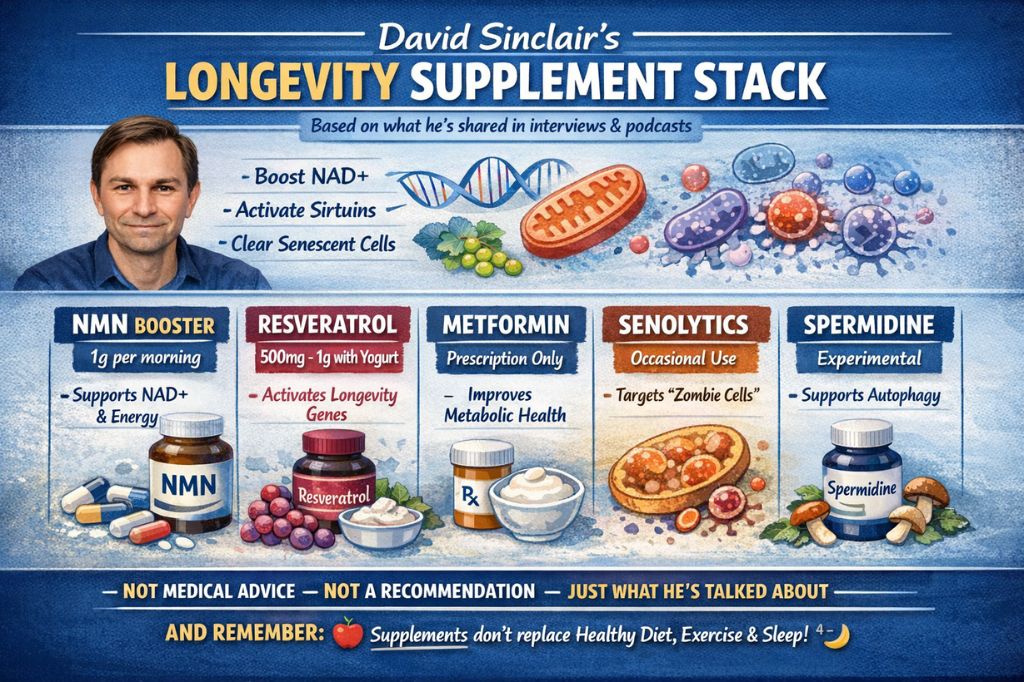
Before we get into it… a quick note on the David Sinclair protocol
Just so it’s super clear from the start: David Sinclair doesn’t publish an official supplement protocol anywhere. What we know about what he takes comes from things he’s said in interviews, podcasts, and YouTube conversations — not from a formal list he’s put out.
He also changes what he takes over time, experiments with things, and is very clear that he’s not telling people to copy him.
So everything below is simply a summary of:
- what he’s mentioned publicly
- what he’s talked about on podcasts
- and what he’s said he personally takes or has tried
It’s not a prescription, not medical advice, and not a one‑size‑fits‑all plan. It’s just me pulling together the most consistent things he’s shared so far.
The Sinclair Supplement Stack
Okay, so you know how obsessed I’ve been with David Sinclair’s work on ageing. He basically looks at ageing like a biological glitch we can influence...not something we just have to accept! His whole approach is based on decades of research, which is why so many people (me included) pay attention to what he’s taking.
Here’s the simple version of what he focuses on:
- Boosting NAD+ (for energy + repair)
- Activating sirtuins (the “longevity genes”)
- Supporting mitochondria
- Clearing out senescent cells (the “zombie cells”)
And he’s always clear: supplements help, but they don’t replace sleep, exercise, or eating well!
Alright, let’s go through the supplements he’s mentioned publicly — the ones he’s talked about in podcasts and interviews.
1. NMN — The NAD+ Booster
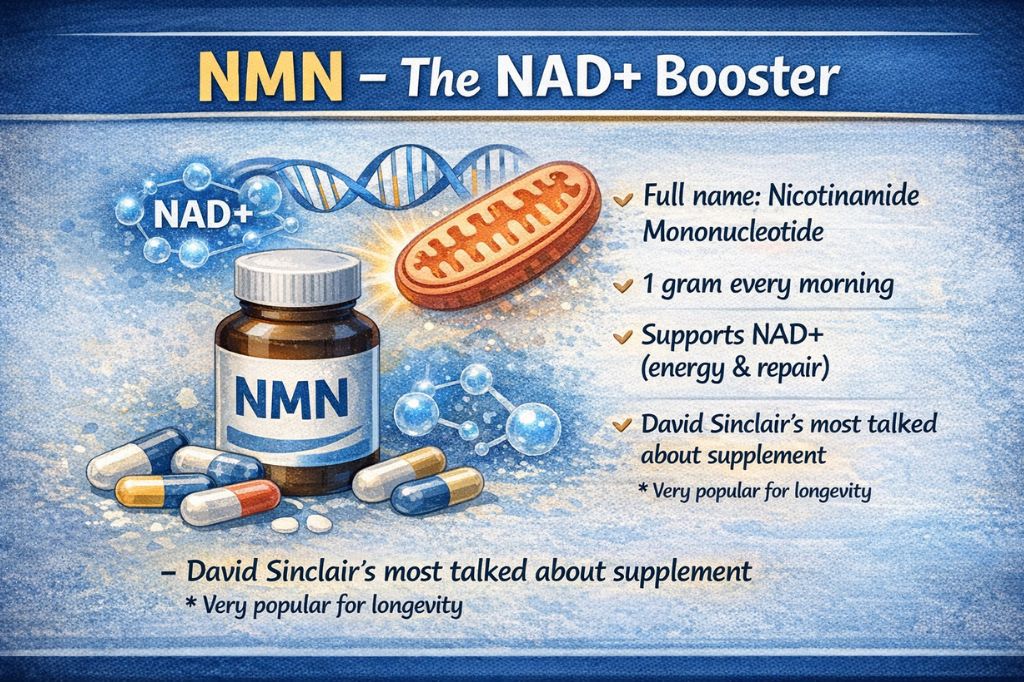
NMN, defined as nicotinamide mononucleotide, is a molecule your body uses to create NAD+ — the compound that fuels energy production and cellular repair.
Sinclair has said he takes NMN in the morning because NAD+ naturally rises early in the day, and he likes to align with that rhythm.
Let’s start with the supplement Sinclair is most famous for talking about: NMN. This is the one he’s mentioned the most consistently over the years, especially in interviews like the Joe Rogan Experience and the Tim Ferriss Show.
NMN supports NAD+, which is basically the fuel your cells use for energy, repair, and keeping everything running smoothly. NAD+ levels naturally drop as we age, which is why NMN has become such a big deal in the longevity world.
Sinclair has said he takes around 1 gram in the morning, partly because it lines up with natural circadian rhythms and partly because he feels it works best that way. Human research is still catching up, but NMN is definitely the supplement he’s talked about the most openly.
2. Resveratrol — The Sirtuin Activator
Resveratrol is a polyphenol antioxidant found in grapes, berries, and red wine.
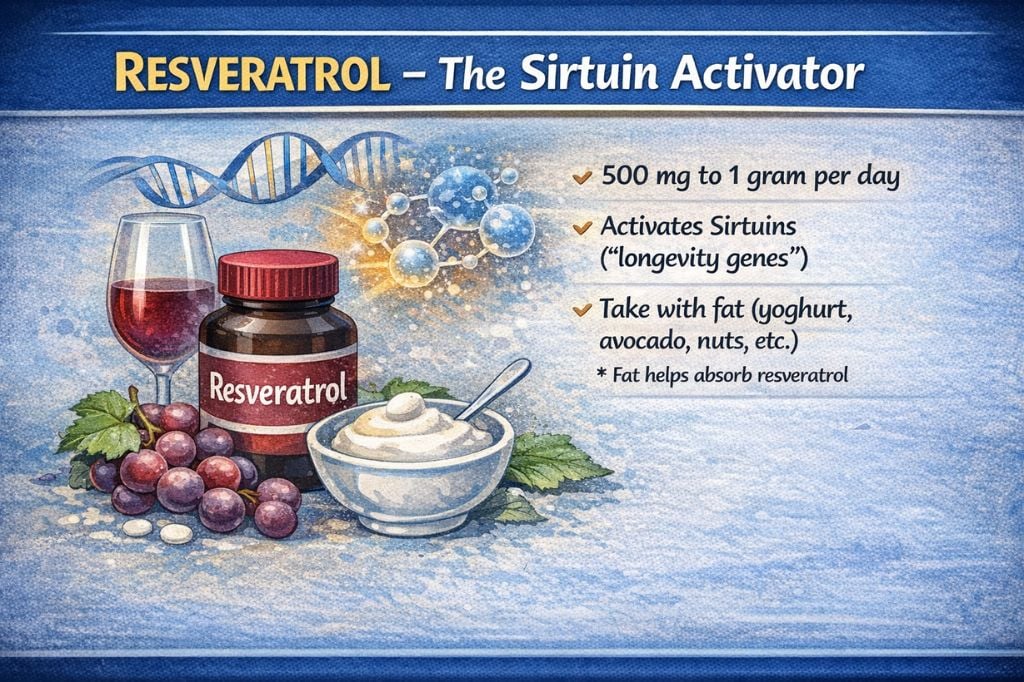
Resveratrol works best when taken with fat — it’s fat‑soluble, not water‑soluble. That’s why Sinclair mixes his with yoghurt because the fat helps your body absorb it.
Sinclair often mentions taking Resveratrol alongside NMN because the two seem to work well together: NMN boosts NAD+, and resveratrol helps activate SIRT1, one of the key longevity‑related genes.
A few things people usually keep in mind with this one:
- Most people take 500 mg to 1 g, based on what Sinclair has mentioned
- It’s fat‑soluble, so pairing it with yoghurt, avocado, nut butter, etc. makes a difference
- Some people combine it with quercetin, although Sinclair hasn’t said he does this himself
And just a personal note from me: I’m a bit more cautious with resveratrol because there’s some discussion online about how it might affect thyroid function. If you have thyroid issues or a sensitive system, it’s one of those supplements worth approaching slowly and checking in with someone who knows your health history.
3. Metformin — The Controversial One
Metformin is a prescription medication originally designed for type 2 diabetes. In the longevity world, metformin may improve insulin sensitivity and support metabolic health.
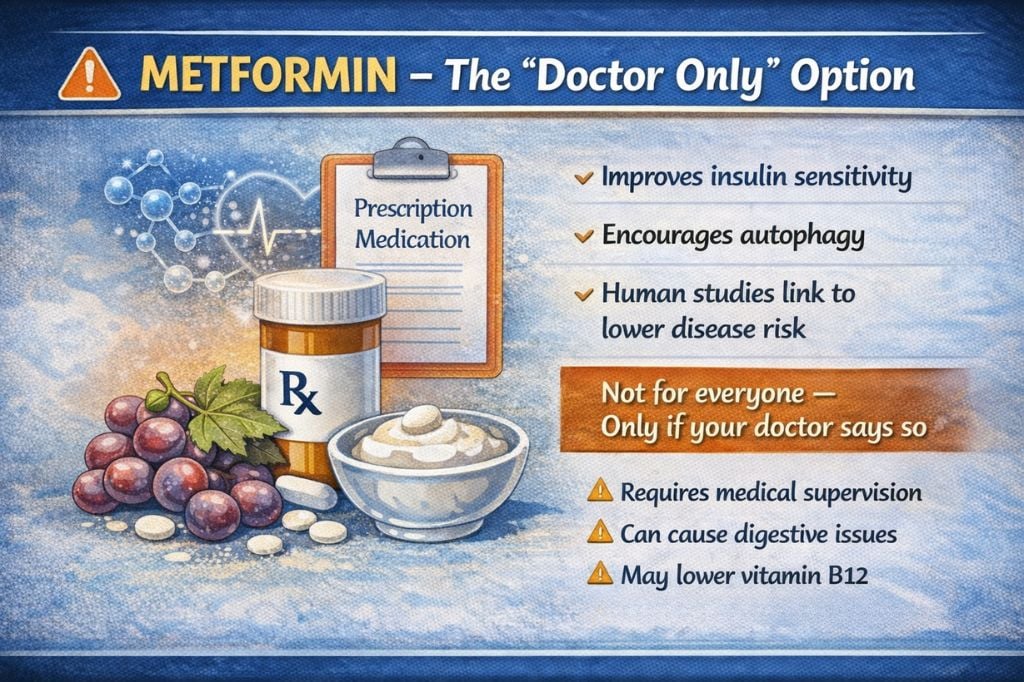
Metformin is not a supplement — it’s a medication and requires medical supervision. Sinclair has talked about taking it in the evening, but he’s also clear that it’s not for everyone.
Metformin is one of the more talked‑about things Sinclair has mentioned over the years, mainly because it wasn’t originally designed for longevity at all — it’s a diabetes medication. But he’s discussed taking it himself because of how it affects metabolism and cellular stress, which are both big themes in ageing research.
Here’s why it gets so much attention:
- It can help improve insulin sensitivity, which tends to decline as we get older
- It may help reduce chronic inflammation
- It encourages autophagy — your body’s natural “clean‑up” mode
- Some observational studies link it to lower disease risk
But this is definitely not a casual supplement:
- You need medical supervision to take it
- It can cause digestive issues, especially at the beginning
- It may lower vitamin B12 over time
- It’s not ideal for everyone — especially very active people or those with already great metabolic health
So while it’s interesting and promising, it’s also one of those “only if your doctor says so” additions. Sinclair talks about it, but he’s also clear that it’s not something everyone should jump into. I don't take Metformin and have no plans to at the moment.
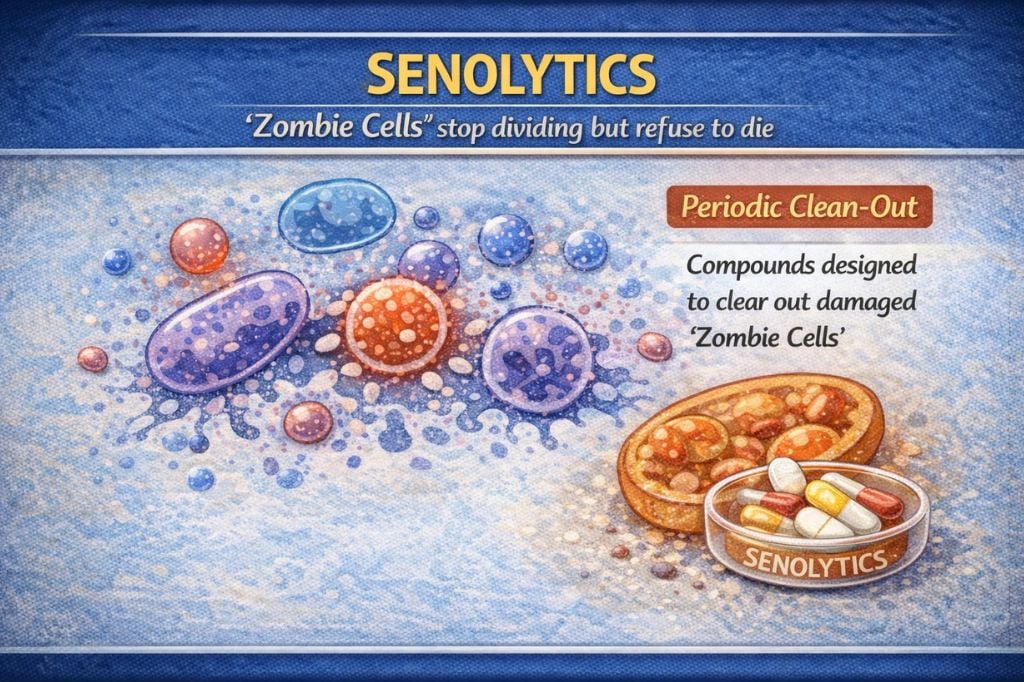
4. Senolytics — Clearing “Zombie Cells”
Senolytics clear out senescent cells. These are the damaged “zombie cells” that stop dividing but refuse to die, and they sit around releasing inflammatory signals that can speed up ageing.
Sinclair finds the research promising, but he doesn’t take senolytics regularly.
The research here is genuinely exciting, and Sinclair often highlights senolytics as one of the most promising areas in longevity science. But it’s important to be clear:
- He doesn’t take senolytics regularly himself
- He’s interested in the science and has experimented with them
- They’re usually taken in cycles, not daily
- The idea is more of a “periodic clean‑out” rather than a routine supplement
This is still a developing field, but it’s one a lot of people in the longevity space are keeping a close eye on. Example of Senolytics include Fisetin and Quercetin.
5. Spermidine — The Autophagy Supporter
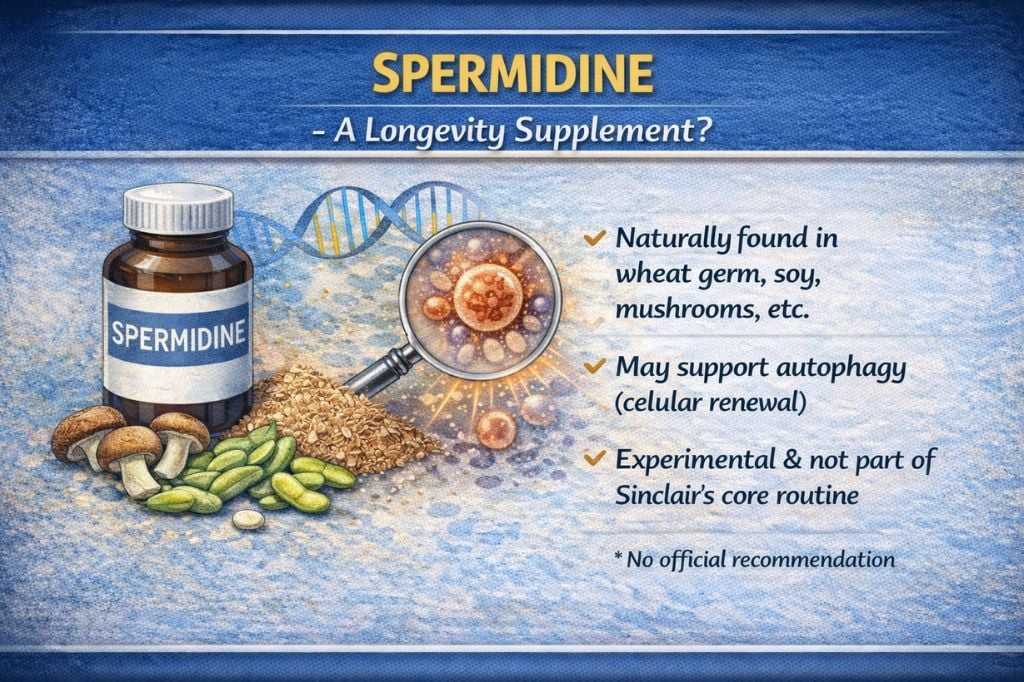
Spermidine is a naturally occurring polyamine found in foods like wheat germ, soy, and mushrooms. It’s often discussed for its potential to support autophagy, the body’s built‑in clean‑up process.
Spermidine supports cellular renewal, but Sinclair treats it as experimental, not foundational. He’s mentioned trying it, but it’s not part of his core routine.
Spermidine is one of those supplements that’s been getting a lot of attention in the longevity world, mostly because of its connection to autophagy — the process your body uses to clean out damaged components and keep cells functioning well.
Sinclair has mentioned spermidine in a few interviews, but he’s never presented it as a core part of his routine. It’s more in the category of “interesting and worth watching” rather than “something he takes every day.”
Here’s what people usually highlight about spermidine:
- It may help support autophagy, especially as we age
- It’s naturally found in foods like wheat germ, soy, mushrooms, and legumes
- Some early research suggests it may support cellular renewal and longevity pathways
- It’s generally considered gentle compared to other longevity compounds
And here’s the important part:
Sinclair treats spermidine as experimental, not foundational. He’s mentioned trying it, but it’s not something he talks about taking consistently or recommending as part of a daily routine.
I personally do take Spermidine for fertility reasons as I believe there is some evidence that it can improve egg quality in older women.
How People Use David Sinclair Supplements in Real Life
One thing I’ve noticed — both from my own routine and from chatting with people in my audience — is that everyone ends up using Sinclair’s ideas a little differently. There’s no “perfect” stack, just different approaches depending on your age, lifestyle, and what you’re trying to improve.
Here’s a simple breakdown:
If you’re in your 40s
A lot of people start with the basics Sinclair talks about most often:
- NMN for energy and cellular repair
- Resveratrol for sirtuin activation
- Metformin only if a doctor thinks it’s appropriate
This combo tends to appeal to people who want more energy, better metabolic health, and a bit of extra support as things naturally start to shift in midlife.
Older adults
Some people in this group become more interested in things like senolytics — not as a daily supplement, but as a periodic “cellular clean‑up” approach. Again, Sinclair doesn’t take these regularly, but he talks about the research often, so it’s something people explore thoughtfully.
Athletes or very active people
This group sometimes leans more heavily on NMN because of its potential role in recovery and mitochondrial support. Some athletes avoid metformin altogether because it can blunt performance — another reminder that personalisation really matters.
The big takeaway? There’s no universal formula. What works beautifully for one person might not suit someone else at all. Sinclair himself says this repeatedly — he experiments, he adjusts, and he never claims his routine is the “right” one for everyone.
Common Myths (Let’s Clear These Up)
Whenever people start looking into longevity supplements, a few myths pop up again and again — and Sinclair is pretty quick to shut these down. Here are the big ones:
Myth 1: “I’ll feel a difference straight away.”
Nope. These supplements work at the cellular level, not the “instant energy boost” level. Think months, not days. It’s more like investing in your future health than chasing a quick fix.
Myth 2: “If a little is good, more must be better.”
This one gets people into trouble. Sinclair talks a lot about optimal ranges, not megadoses. Too much of anything — even the “good stuff” — can backfire or just be a waste of money.
Myth 3: “Supplements can replace lifestyle.”
If only. Sinclair is very clear that supplements are add‑ons, not magic. Sleep, movement, stress management, and nutrition still do the heavy lifting. Supplements just support the foundation you’re already building.