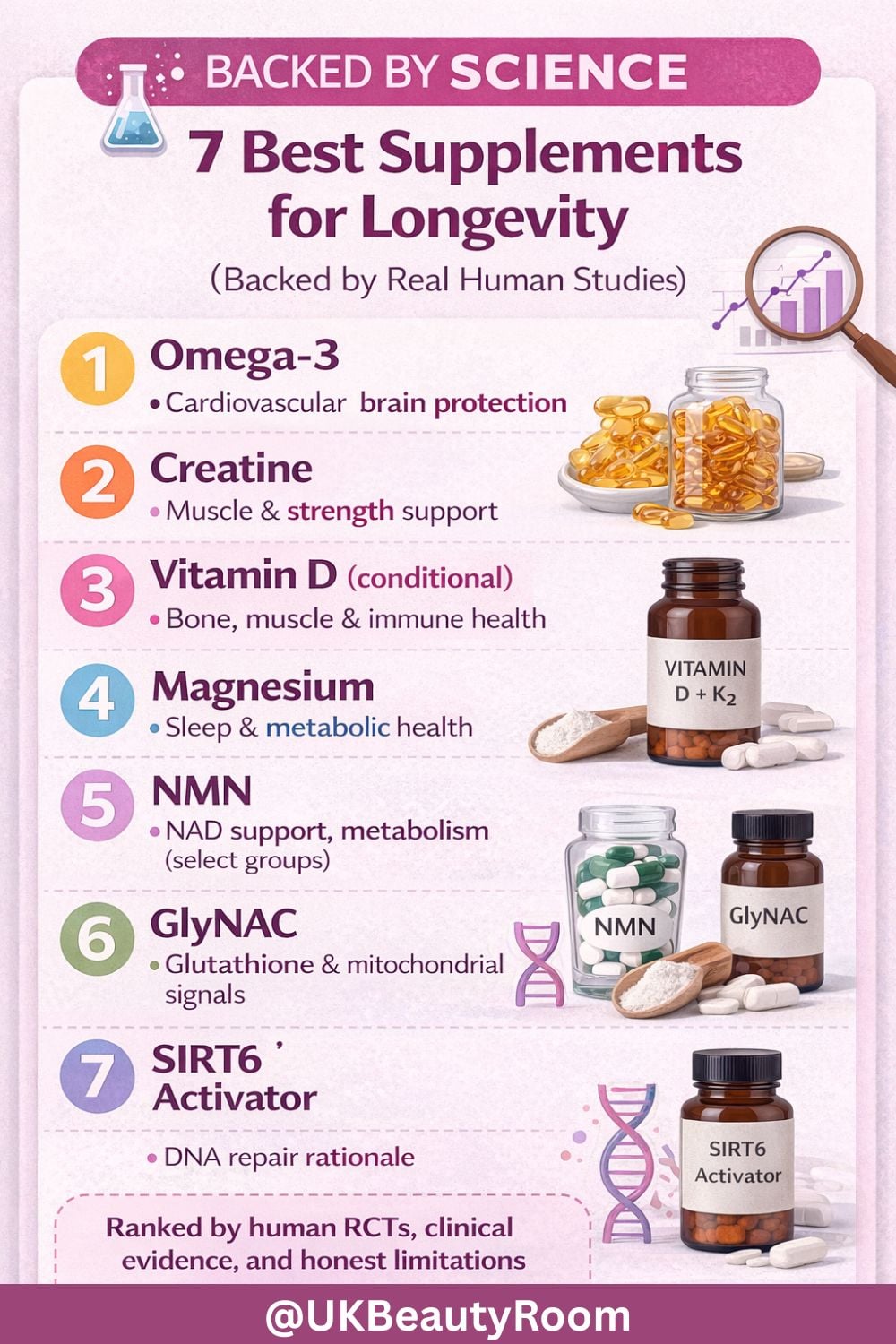
7 Best Supplements for Longevity (Backed by Real Human Studies)
Longevity isn’t about chasing “anti-aging” hype. It’s about extending healthspan—more years with strength, energy, sharp cognition, and low disease burden—and doing it using evidence that holds up in humans.
Modern ageing biology gives us a useful map. Ageing is linked to a set of interacting processes (often summarised as “hallmarks”), including chronic inflammation, mitochondrial dysfunction, loss of proteostasis, cellular senescence, and dysregulated nutrient sensing. These processes don’t just “happen with time”; they change measurable biology and raise risk for real outcomes like frailty, cardiovascular disease, cancer, and neurodegeneration.
This article is written to a higher standard than most supplement roundups:
- We will prioritise human clinical trials (randomised controlled trials when available), not just cell or animal data.
- We will separate hard outcomes (mortality, events, diagnosis) from surrogates (lipids, blood pressure, inflammation markers) and from longevity-adjacent biomarkers (telomeres, epigenetic clocks, NAD).
- We will be explicit about who a supplement seems to help (age, baseline deficiency, health status), dose, duration, and safety/interaction risks.
- When evidence is mixed, we’ll say so—because some big trials show “no meaningful effect” for certain popular goals (for example, vitamin D and omega-3 did not prevent frailty in a VITAL ancillary study).
You’ll also see a core theme: the best-supported “longevity supplements” often fall into two buckets:
- Correcting a real gap (e.g., deficiency states that measurably harm health).
- Targeting specific ageing mechanisms with at least early human trial support (e.g., improving glutathione/mitochondrial function with GlyNAC in older adults).
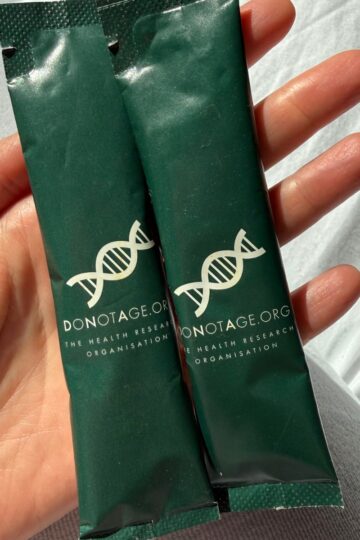
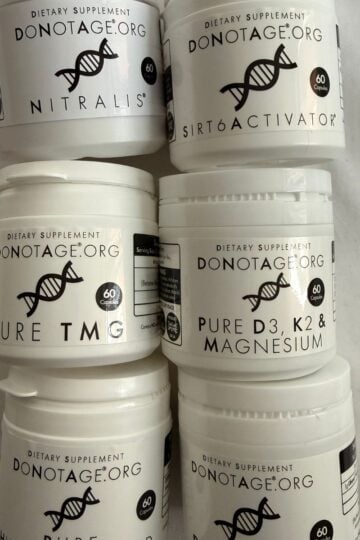
The supplements I recommend in this article are from DoNotAge. I choose them because they are a health research organisation — not just a supplement brand — and their products are known for exceptionally high purity and rigorous quality testing.
If you want to try the same supplements I use and recommend, you can get 10% off with my code: UKBEAUTY
👉 Shop DoNotAge — 10% OFF (UKBEAUTY)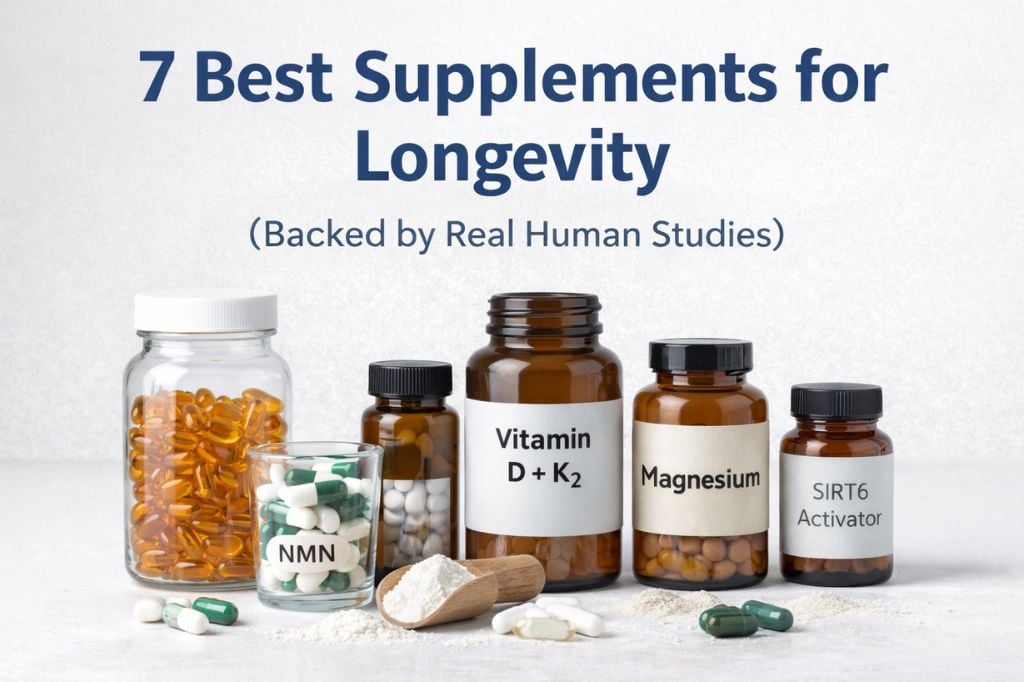
🔬 Methodology: How Supplements Are Evaluated
This article applies strict, evidence-based criteria to separate science from marketing.
Evidence hierarchy
- Human randomised controlled trials (RCTs) — prioritised, especially in midlife and older adults
- Human observational studies — used for long-term associations, not causality
- Mechanistic human data — measured pathways (e.g. insulin sensitivity, inflammation)
- Animal or cell studies — mechanism only, never proof
Animal lifespan extension is not treated as evidence of human longevity benefit.
Outcome categories
Results are clearly separated into:
- Hard outcomes: mortality, disease incidence, fractures, cardiovascular events, dementia
- Functional outcomes: strength, gait speed, cognition, blood pressure, insulin sensitivity
- Biomarkers: CRP, HbA1c, triglycerides, NAD, glutathione, epigenetic clocks
Biomarker changes ≠ extended lifespan.
Population relevance
For each supplement, evidence is assessed by:
- Age group studied
- Baseline status (deficient vs sufficient)
- Health context (healthy, athletic, insulin-resistant, frail)
Benefits limited to specific groups are stated explicitly.
Dose, duration, and safety
Only doses and timeframes used in human trials are discussed, alongside:
- Side effects
- Drug or supplement interactions
- Upper safety limits where established
What this article does not do
- No hype-based rankings
- No animal-to-human lifespan extrapolation
- No claims of ageing reversal
- No assumption that more is better
Longevity biology is slow, cumulative, and conservative.
1. NMN (Nicotinamide Mononucleotide)
What it is (and why people take it)
NMN is a building block your body can use to make NAD+, a coenzyme involved in energy metabolism and many repair processes. NAD+ levels tend to fall with age, so NMN is marketed as a way to support cellular energy and “healthy ageing.”
What human trials actually show
1) NMN reliably increases NAD-related blood markers
A 60-day, multi-centre, double-blind, placebo-controlled trial (80 healthy middle-aged adults) tested 300 mg, 600 mg, or 900 mg/day and found dose-dependent increases in blood NAD with NMN.
A 2024 systematic review/meta-analysis of 12 RCTs (513 participants) found NMN significantly raises blood NAD levels overall, but most clinically relevant outcomes were not significantly different vs control.
Meaning: biomarker effect is consistent; real-world health outcomes are less consistent.
2) Metabolic benefit appears in a specific group (not “everyone”)
A 10-week, randomised, double-blind, placebo-controlled trial in postmenopausal women with prediabetes who were overweight/obese found NMN improved skeletal muscle insulin sensitivity and insulin signalling.
Meaning: NMN may help insulin resistance in a defined population, but you should not generalise this to healthy people.
3) Physical function signals are mixed but interesting
A 2024 paper in older adults reports NMN intake increased blood NAD+ and was linked to maintained walking speed and improved sleep quality (details vary by study design and outcomes).
The overall RCT literature still leans “early signals, not settled.”
Safety (what we can say with confidence)
Short-term human safety looks reasonable in studied doses:
- A 4-week study reported NMN was safe and well tolerated at 1,250 mg/day in healthy adults.
- In the 60-day dose-ranging RCT (up to 900 mg/day), NMN was also generally well tolerated.
What we don’t have: large, long trials proving NMN reduces major disease outcomes or mortality.
Who NMN is most rational for (based on trials)
- People focused on NAD-related biomarkers, accepting that this is not proven to translate into longer life.
- People with insulin resistance/prediabetes (especially similar to the group studied: postmenopausal, overweight/obese).
Dosing used in studies (not “internet dosing”)
Common trial ranges:
- 250–900 mg/day for 6–10 weeks is typical in several human studies.
- 1,250 mg/day has short-term safety data (4 weeks).
Practical cautions
- If you have cancer history, are pregnant, or take complex meds, treat NMN as “uncertain-risk/uncertain-benefit” and discuss with a clinician.
- Don’t stack multiple NAD precursors (NMN + NR + high-dose niacin) unless there’s a clear reason and you’re tracking outcomes.
Regulatory note (why it matters for product availability)
In the US, NMN’s status has been disputed under the “drug preclusion” rule, but reports in 2025 describe FDA communications indicating NMN may be lawfully marketed as a dietary supplement.
Why I take 500 mg NMN
I’m 43 and my goal isn’t “anti-ageing” — it’s staying energetic, strong, and metabolically healthy as I get older. I take NMN because NAD levels decline with age and NAD is central to cellular energy production, mitochondrial function, and muscle metabolism.
Human trials show NMN reliably increases NAD-related markers at doses between 250–900 mg/day. I take 500 mg daily because it sits squarely within studied ranges and avoids high-dose use where long-term outcome data is limited.
Why I take NMN with TMG
As NAD is used, it breaks down into nicotinamide, which may be methylated and excreted, using up methyl groups - especially as recycling efficiency declines with age. TMG provides methyl donors, making it a reasonable companion to NMN. This is a precautionary choice, not a universal requirement.
2. TMG (Trimethylglycine / Betaine)
I pair TMG with NMN because NAD turnover increases when you use NAD precursors. As NAD is used, it breaks down into nicotinamide, which is cleared from the body through methylation. TMG provides methyl groups, so I use it as a supportive safeguard to avoid placing unnecessary demand on methylation pathways. It’s a deliberate, conservative choice within my longevity stack — not because TMG is a longevity supplement on its own, but because it supports the biology involved when taking NMN regularly.
3. Omega-3 Fatty Acids (EPA & DHA)
Why omega-3s matter for longevity
Omega-3 fatty acids—specifically EPA and DHA—are among the most consistently supported longevity-related nutrients in human research. Their primary role is reducing chronic low-grade inflammation, a core driver of cardiovascular disease, metabolic dysfunction, cognitive decline, and biological ageing.
Human clinical evidence
- Large observational cohorts show higher blood omega-3 levels are associated with lower all-cause mortality, with effect sizes comparable to major lifestyle risk factors.
- Randomised trials consistently show omega-3s lower triglycerides, improve endothelial function, and reduce systemic inflammation.
- Meta-analyses show benefits for cardiovascular events, particularly in higher-risk or deficient populations.
- Higher omega-3 index levels are associated with better cognitive outcomes and lower dementia risk in older adults.
What omega-3s do not do
- They are not anabolic
- They do not directly increase lifespan in RCTs
- Benefits are dose- and status-dependent
Practical take
Omega-3s are a foundational longevity supplement, especially if dietary intake is low. Blood testing (Omega-3 Index) is the most reliable way to personalise dosing.
4. Creatine
Why creatine matters for healthy ageing
Creatine is not just a sports supplement. It supports cellular energy availability (ATP) in muscle and brain tissue—both of which decline with age. Muscle mass, strength, and power are among the strongest predictors of healthspan and survival in midlife and older adults.
Human clinical evidence
- Hundreds of RCTs show creatine increases muscle strength and lean mass when combined with resistance training.
- In older adults, creatine improves functional performance, reduces fall risk, and supports bone density.
- Human trials also show benefits for cognitive performance, especially under stress or sleep deprivation.
- Creatine improves glucose uptake and insulin sensitivity when paired with exercise.
Safety
Creatine is one of the best-studied supplements in humans, with long-term safety data in healthy adults.
Practical take
If your goal is to build and maintain muscle, creatine is one of the highest-value longevity supplements available. It directly supports strength, resilience, and metabolic health.
5. Vitamin D (if needed)
Why vitamin D is conditional
Vitamin D is not a “more is better” longevity supplement. Its benefits are primarily seen when correcting deficiency, which is common in northern latitudes and in people with limited sun exposure.
Human clinical evidence
- Strong RCT evidence for bone health, fracture prevention, and reduced fall risk in deficient individuals.
- Meta-analyses show modest reductions in cancer mortality with supplementation.
- Vitamin D supports immune regulation and muscle function, both relevant to ageing.
What vitamin D does not do
- It does not extend lifespan in vitamin-D-replete individuals
- It does not broadly prevent chronic disease when baseline levels are adequate
Practical take
Vitamin D should be tested, not guessed. Supplementation is rational if levels are low and should ideally be paired with vitamin K2 to support calcium handling.
6. Magnesium
Why magnesium is underestimated
Magnesium is required for over 300 enzymatic reactions, including energy production, glucose regulation, muscle contraction, and sleep regulation. Deficiency becomes more common with age and contributes to inflammation and metabolic dysfunction.
Human clinical evidence
- Meta-analyses link higher magnesium intake to lower all-cause mortality.
- RCTs show magnesium supplementation lowers blood pressure, improves insulin sensitivity, and supports sleep quality.
- Adequate magnesium is associated with better bone density and neuromuscular function.
Practical take
Magnesium is a foundational support nutrient, not a “longevity hack.” Forms like glycinate, citrate, or malate are better absorbed and better tolerated.
7. SIRT6 Activator
Why SIRT6 matters in ageing biology
SIRT6 is a longevity-associated enzyme involved in:
- DNA repair
- Genomic stability
- Glucose metabolism
- Inflammation control
Reduced SIRT6 activity is linked to accelerated ageing, metabolic dysfunction, and genomic instability.
Evidence context
- Most evidence for SIRT6 comes from mechanistic and animal research, where increased SIRT6 activity improves metabolic health and lifespan markers.
- Human outcome data is not yet available, but the biological role of SIRT6 in DNA repair and glucose regulation is well established.
Why SIRT6 activation is different from NAD boosting
Unlike NAD precursors, which increase substrate availability, SIRT6 activators aim to support downstream repair and metabolic pathways directly. This makes them conceptually appealing as part of a systems-based longevity approach, rather than single-marker optimisation.
Practical take
SIRT6 activators sit in the early-science but biologically coherent category. They are not proven longevity interventions, but they align with known ageing mechanisms and may complement NAD-focused strategies.
Omega-3 (EPA/DHA)
Creatine
Vitamin D (if deficient)
Magnesium
NMN
GlyNAC
Taurine
SIRT6 Activator